www.iprinthub.co
Showing posts with label 3d printing. Show all posts
Showing posts with label 3d printing. Show all posts
Sunday, 10 June 2018

Sunday, 3 June 2018
FROM PIXELS TO PLATE, FOOD HAS BECOME 3D PRINTING’S DELICIOUS NEW FRONTIER
Agriculture has come a long way in the past century. We produce more food than ever before — but our current model is unsustainable, and as the world’s population rapidly approaches 8 billion, modern food production methods will need a radical transformation to keep up. Luckily, there’s a range of new technologies that might make it possible.

Three-dimensional printers — machines that can fit on a desktop and create 3D objects from plastics, metals, and other raw materials — can do just about anything. High-precision jets pump out custom medical implants at the press of a button. Carbon-fiber printers spit out automobile prototypes with jaw-dropping precision. And off-the-shelf modelers generate custom toys, jewelry, home decorations, and clothes with no more than a digital file.
But there’s a new frontier in 3D printing that’s only beginning to come into focus: food. Recent innovations have made possible machines that print, cook, and serve foods on a mass scale. And the industry’s luminaries aren’t stopping there: They think 3D food printers could improve the nutritional value of meals, produce intricate sculptures out of everyday foodstuff, and solve hunger in regions of the world that lack access to fresh, affordable ingredients.
There’s no doubt about it — 3D food printing’s come a long way. But like any new technology with lofty promises, it’s far from a silver bullet.
THE BASICS OF 3D FOOD PRINTING

Most 3D food printers are deposition printers, meaning they deposit layers of raw material in a process known as additive manufacturing. A newer category of 3D printer — binding printers — adhere materials together with a kind of edible cement.
The latest generation of 3D food printers is much more complicated, combining nozzles, powdery material, lasers, and robotic arms to make sugar sculptures, patterned chocolate, and latticed pastry. One printer, the ChefJet from 3D Systems, crystalizes thin layers of fine-grain sugar into a variety of geometric configurations. Another, the Choc Edge from Barcelona-based Natural Foods, dispenses chocolate from syringes in beautifully melty patterns.
Cutting-edge printers can tackle even more. The Foodini, for example, uses fresh ingredients loaded into stainless steel capsules to make foods like pizza, stuffed pasta, quiche, and brownies. Pasta-maker Barilla’s machine prints noodles with water and semolina flour. And a prototype design by Hod Lipson, a professor of mechanical engineering at Columbia, fabricates nutrition bars and simple pastries.
FOOD PRODUCTION
Already, commercial kitchens, bakeries, and confectionaries are using 3D food printers to save time and effort.
Hervé Malivert, director of food technology and culinary coordinator at the International Culinary Center, said the technology’s democratizing. “With a 3D printer, you can print complicated chocolate sculptures and beautiful pieces for decoration on a wedding cake,” he told Digital Trends. “Not everybody can do that — it takes years and years of experience, but a printer makes it easy.”
Paco Pérez, the executive chef at two-Michelin-starred restaurant Miramar in Llançà, Spain, has already put that theory into practice. He uses a Foodini to “re-create forms and pieces” of food that are “exactly identical,” freeing line cooks to complete other tasks.

And he’s not the only one. Food Ink, a pop-up “3D-printed restaurant,” was constructed almost entirely with commercially available printers. Everything from the restaurant’s tables to its chairs and lamps were printed over the course of a week. And all of the entrees and desserts it served were 3D-printed, too; rather than farm to table, think of it as pixels to plate.

There’s mass-market potential in 3D food printing. XYZprinting’s eponymous XYZ Food Printer, which the company unveiled at the 2015 Consumer Electronics Show in Las Vegas, is already making ready-to-bake cookies, pizza, meat pies, and scones for bakeries in China and an Australian food retail chain.

SUSTAINABILITY
The global population is expected to grow to an estimated 9.6 billion people by 2050, and some analysts project that food production will need to be raised by 50 percent to maintain current levels. Sustainability, it seems clear, is becoming less a “nice-to-have” than a necessity.
3D food printing probably won’t solve the problem, but it could contribute to the solution. Some experts believe printers that use hydrocolloids, or substances that form gels with water, could be used to replace the base ingredients of familiar dishes with plentiful renewables like algae, duckweed, and grass.
To that end, a team at the Netherlands Organization for Applied Scientific Research in Germany has developed a printing method for microalgae, a natural source of protein, carbohydrates, pigments, and antioxidants. In one study, research lead Kjeld van Bommel added milled mealworm to a shortbread cookie recipe. “The look [of the worms] put me off, but in the shape of a cookie, I’ll eat it,” he said in an interview with Popular Mechanics.
Joseph F. Coughlin, founder and director of the AgeLab at Massachusetts Institute of Technology, thinks 3D printing can reduce fuel use and emissions. Grocery stores of the future might stock “food cartridges” that last years on end rather than perishable whole ingredients, freeing up shelf space and reducing transportation and storage requirements. “[The] delivery of product[s] may be in larger amounts that may be easily stored,” he told The New York Times.

NUTRITION
3D food printers could do more than produce renewable, environmentally-friendly food stores — they also have the potential to revolutionize nutrition.
In this field, NASA’s at the forefront. In 2013, the agency experimented with technologies that could preserve food on long-term missions, awarding a $125,000 Small Business Innovation Research contract to Systems & Materials Research Corporation (SMRC) to develop a 3D-printed food system for astronauts.
Future 3D food printers could make processed food more wholesome. Lynette Kucsma, cofounder of Foodini, envisions printers producing more nutritious takes on preservative-filled fast food burger patties.
Lipson predicts that future printers will be able to deliver exact dosages of drugs, vitamins and supplements, and foods customized to the specific caloric needs of a given user.

“Food printing could allow consumers to print food with customized nutritional content, optimized based on biometric and genomic data,” Lispon told The New York Times. “So instead of eating a slice of yesterday’s bread from the supermarket, you’d eat something baked just for you on demand. This may be the missing link between nutrition and personal medicine, and the food that’s on your table.”
But 3D food printing holds promise for those with ailments and allergies, In Germany, a group of retirement homes have adopted 3D printing technology that purees vegetables like carrots and broccoli into nutritional, easy-to-chew soft molds of their original shape. And WASP, a 3D printing company based in Italy, is testing a printer that can produce gluten-free versions of popular foods.
OBSTACLES
Despite the many recent advancements in 3D food printing, the industry has a myriad of challenges to overcome.
Currently, most ingredients must be converted to a paste before a printer can manipulate them, and the printing process is typically quite time-consuming. “Printing in food materials is a lot more difficult from an engineering point of view than plastic or metals,” Lipson said. “They interact with each other in very complex ways.”
On top of that, most of the 3D food printers in existence are restricted to dry, shelf-stable ingredients, because most protein and dairy products have a spoilage risk. “Everything must be dry, because otherwise you’d have to worry about something going bad,” said Malivert. “It’s a question of health.”
Then, there’s the matter of expectations. “We need to be sensible about this,” Daniel Crossley, executive director at the U.K.’s Food Ethics Council, told Digital Trends. “We need to start with the problem we’re trying to solve and work backwards, and try to understand the social and health impacts of 3D food printing. I’m not a believer in novelty for novelty’s sake.”
Even some in the culinary world are skeptical. Tony Tantillo, food expert and contributor to CBS in New York, believes 3D food printers are better suited for fast food joints than homes and high-end restaurants. “Those two things shouldn’t be together,” he said in a recent interview. “‘Printed food’ for a magazine, yes. But to eat? Nah, nah.”
But times change. “When people first heard about microwaves, they didn’t understand the technology,” Lynette Kucsama, CEO and founder of Natural Machines, told Fortune. “Now, 90 percent of households have microwaves.”
www.imdadpro.co
Three-dimensional printers — machines that can fit on a desktop and create 3D objects from plastics, metals, and other raw materials — can do just about anything. High-precision jets pump out custom medical implants at the press of a button. Carbon-fiber printers spit out automobile prototypes with jaw-dropping precision. And off-the-shelf modelers generate custom toys, jewelry, home decorations, and clothes with no more than a digital file.
But there’s a new frontier in 3D printing that’s only beginning to come into focus: food. Recent innovations have made possible machines that print, cook, and serve foods on a mass scale. And the industry’s luminaries aren’t stopping there: They think 3D food printers could improve the nutritional value of meals, produce intricate sculptures out of everyday foodstuff, and solve hunger in regions of the world that lack access to fresh, affordable ingredients.
There’s no doubt about it — 3D food printing’s come a long way. But like any new technology with lofty promises, it’s far from a silver bullet.
THE BASICS OF 3D FOOD PRINTING
Most 3D food printers are deposition printers, meaning they deposit layers of raw material in a process known as additive manufacturing. A newer category of 3D printer — binding printers — adhere materials together with a kind of edible cement.
The latest generation of 3D food printers is much more complicated, combining nozzles, powdery material, lasers, and robotic arms to make sugar sculptures, patterned chocolate, and latticed pastry. One printer, the ChefJet from 3D Systems, crystalizes thin layers of fine-grain sugar into a variety of geometric configurations. Another, the Choc Edge from Barcelona-based Natural Foods, dispenses chocolate from syringes in beautifully melty patterns.
Cutting-edge printers can tackle even more. The Foodini, for example, uses fresh ingredients loaded into stainless steel capsules to make foods like pizza, stuffed pasta, quiche, and brownies. Pasta-maker Barilla’s machine prints noodles with water and semolina flour. And a prototype design by Hod Lipson, a professor of mechanical engineering at Columbia, fabricates nutrition bars and simple pastries.
FOOD PRODUCTION
Already, commercial kitchens, bakeries, and confectionaries are using 3D food printers to save time and effort.
Hervé Malivert, director of food technology and culinary coordinator at the International Culinary Center, said the technology’s democratizing. “With a 3D printer, you can print complicated chocolate sculptures and beautiful pieces for decoration on a wedding cake,” he told Digital Trends. “Not everybody can do that — it takes years and years of experience, but a printer makes it easy.”
Paco Pérez, the executive chef at two-Michelin-starred restaurant Miramar in Llançà, Spain, has already put that theory into practice. He uses a Foodini to “re-create forms and pieces” of food that are “exactly identical,” freeing line cooks to complete other tasks.
And he’s not the only one. Food Ink, a pop-up “3D-printed restaurant,” was constructed almost entirely with commercially available printers. Everything from the restaurant’s tables to its chairs and lamps were printed over the course of a week. And all of the entrees and desserts it served were 3D-printed, too; rather than farm to table, think of it as pixels to plate.
There’s mass-market potential in 3D food printing. XYZprinting’s eponymous XYZ Food Printer, which the company unveiled at the 2015 Consumer Electronics Show in Las Vegas, is already making ready-to-bake cookies, pizza, meat pies, and scones for bakeries in China and an Australian food retail chain.
SUSTAINABILITY
The global population is expected to grow to an estimated 9.6 billion people by 2050, and some analysts project that food production will need to be raised by 50 percent to maintain current levels. Sustainability, it seems clear, is becoming less a “nice-to-have” than a necessity.
3D food printing probably won’t solve the problem, but it could contribute to the solution. Some experts believe printers that use hydrocolloids, or substances that form gels with water, could be used to replace the base ingredients of familiar dishes with plentiful renewables like algae, duckweed, and grass.
To that end, a team at the Netherlands Organization for Applied Scientific Research in Germany has developed a printing method for microalgae, a natural source of protein, carbohydrates, pigments, and antioxidants. In one study, research lead Kjeld van Bommel added milled mealworm to a shortbread cookie recipe. “The look [of the worms] put me off, but in the shape of a cookie, I’ll eat it,” he said in an interview with Popular Mechanics.
Joseph F. Coughlin, founder and director of the AgeLab at Massachusetts Institute of Technology, thinks 3D printing can reduce fuel use and emissions. Grocery stores of the future might stock “food cartridges” that last years on end rather than perishable whole ingredients, freeing up shelf space and reducing transportation and storage requirements. “[The] delivery of product[s] may be in larger amounts that may be easily stored,” he told The New York Times.
NUTRITION
3D food printers could do more than produce renewable, environmentally-friendly food stores — they also have the potential to revolutionize nutrition.
In this field, NASA’s at the forefront. In 2013, the agency experimented with technologies that could preserve food on long-term missions, awarding a $125,000 Small Business Innovation Research contract to Systems & Materials Research Corporation (SMRC) to develop a 3D-printed food system for astronauts.
Future 3D food printers could make processed food more wholesome. Lynette Kucsma, cofounder of Foodini, envisions printers producing more nutritious takes on preservative-filled fast food burger patties.
Lipson predicts that future printers will be able to deliver exact dosages of drugs, vitamins and supplements, and foods customized to the specific caloric needs of a given user.
“Food printing could allow consumers to print food with customized nutritional content, optimized based on biometric and genomic data,” Lispon told The New York Times. “So instead of eating a slice of yesterday’s bread from the supermarket, you’d eat something baked just for you on demand. This may be the missing link between nutrition and personal medicine, and the food that’s on your table.”
But 3D food printing holds promise for those with ailments and allergies, In Germany, a group of retirement homes have adopted 3D printing technology that purees vegetables like carrots and broccoli into nutritional, easy-to-chew soft molds of their original shape. And WASP, a 3D printing company based in Italy, is testing a printer that can produce gluten-free versions of popular foods.
OBSTACLES
Despite the many recent advancements in 3D food printing, the industry has a myriad of challenges to overcome.
Currently, most ingredients must be converted to a paste before a printer can manipulate them, and the printing process is typically quite time-consuming. “Printing in food materials is a lot more difficult from an engineering point of view than plastic or metals,” Lipson said. “They interact with each other in very complex ways.”
On top of that, most of the 3D food printers in existence are restricted to dry, shelf-stable ingredients, because most protein and dairy products have a spoilage risk. “Everything must be dry, because otherwise you’d have to worry about something going bad,” said Malivert. “It’s a question of health.”
Then, there’s the matter of expectations. “We need to be sensible about this,” Daniel Crossley, executive director at the U.K.’s Food Ethics Council, told Digital Trends. “We need to start with the problem we’re trying to solve and work backwards, and try to understand the social and health impacts of 3D food printing. I’m not a believer in novelty for novelty’s sake.”
Even some in the culinary world are skeptical. Tony Tantillo, food expert and contributor to CBS in New York, believes 3D food printers are better suited for fast food joints than homes and high-end restaurants. “Those two things shouldn’t be together,” he said in a recent interview. “‘Printed food’ for a magazine, yes. But to eat? Nah, nah.”
But times change. “When people first heard about microwaves, they didn’t understand the technology,” Lynette Kucsama, CEO and founder of Natural Machines, told Fortune. “Now, 90 percent of households have microwaves.”
www.imdadpro.co
Monday, 28 May 2018
Customizable 3D printed concrete molds to restore historic architecture
Customizable 3D printed concrete molds to restore historic architecture
In the past decade, the relationship between technology and craft has seen a significant reversal. Usually 3D printing was used to manufacture small objects, figurines and prototypes, it is now being used to construct affordable housing in the construction industry. Artists and artisans across creative fields are embracing digital tools as the new medium for human expression.
EDG, a New York architecture and engineering firm has come up with a cost-effective way to bridge technology and craft: Modern Ornamental: a new form of digital sculpture. The key lies in 3D printing.


In developing modern ornamental, laser 3D scanning software, rendering software (like 3DSMax and Rhino) and algorithmic modeling programs allow the company to recreate virtually anything with ease. EDG then selected the right materials and 3D printing technology to make plastic molds; these would be used to produce copies of architectural ornamentation. The team began prototyping with a small MakerBot Replicator Z18.
"We focused on hollow form plastic molds for economy—to be filled with standard and colored concrete. Through exhaustive experimentation, we found the perfect balance of material cost, efficiency and strength, ensuring that the molds can be easily reproduced." says the company.
The 3D-printed plastic mold is inlaid with a laser cut wire mesh to provide reinforcement. The final prototypes were manufactured by VoxelJet using their VoxelJet VX1000 3D printer for the casting molds and were fabricated in-house with Sika concrete.


When on site, these ornaments can reportedly be produced in as little as a day. Additionally, with stored digital catalogue of parts, architects can easily reprint a mold. "Should an element ever need repair or replacement, the could simply be removed from the building, and a new one could be reprinted and recast on-site, the same day."

The firm was inspired by the pending demolition of 574 Fifth Avenue, a 1940 building with intricate ornamentation which was being torn down because the cost of restoration was too steep. As put by EDG, "Facade ornamentation in the classical style remains impossible to produce by current means. Architectural hand sculpting would be an exorbitant luxury if not also a lost art, laser cutting remains prohibitively expensive, and precast concrete is creatively limiting—as its affordability is derived from the repetition of basic forms. To that end, architects and developers turn increasingly to the restoration of existing treasures, which are in limited and often neglected supply."

With their method of construction, ornamentation can be designed and incorporated into the facade without exceeding the budget. "This project began with the simple goal of finding a way to salvage and restore many of the deteriorating architectural treasures in New York City, and around the world," says John Meyer, Founding and Managing Partner of EDG. "The innate beauty and rich history of these gems were vanishing as the cost of their repair became progressively prohibitive. Recognizing the tragedy these losses, which, like Penn Station, often isn’t fully realized until after the fact, we set about creating a cost effective method of reconstruction and repair. Having achieved that, we also quickly realized that the ease and accessibility of this method of construction held the potential for a truly seismic shift in the creation of building facades. Drawing inspiration from classic styles, we transformed those details into something modern and fresh."

This process will not only usher in the forgotten craft of the “hand” into the modern age, but also democratize the process of design, allowing practitioners from divergent fields to execute what was previously unimaginable.
EDG is building a customized 3D printer suited for their future projects, including a multi-family project in Greenpoint, Brooklyn.
www.iprinthub.co
In the past decade, the relationship between technology and craft has seen a significant reversal. Usually 3D printing was used to manufacture small objects, figurines and prototypes, it is now being used to construct affordable housing in the construction industry. Artists and artisans across creative fields are embracing digital tools as the new medium for human expression.
EDG, a New York architecture and engineering firm has come up with a cost-effective way to bridge technology and craft: Modern Ornamental: a new form of digital sculpture. The key lies in 3D printing.
In developing modern ornamental, laser 3D scanning software, rendering software (like 3DSMax and Rhino) and algorithmic modeling programs allow the company to recreate virtually anything with ease. EDG then selected the right materials and 3D printing technology to make plastic molds; these would be used to produce copies of architectural ornamentation. The team began prototyping with a small MakerBot Replicator Z18.
"We focused on hollow form plastic molds for economy—to be filled with standard and colored concrete. Through exhaustive experimentation, we found the perfect balance of material cost, efficiency and strength, ensuring that the molds can be easily reproduced." says the company.
The 3D-printed plastic mold is inlaid with a laser cut wire mesh to provide reinforcement. The final prototypes were manufactured by VoxelJet using their VoxelJet VX1000 3D printer for the casting molds and were fabricated in-house with Sika concrete.
When on site, these ornaments can reportedly be produced in as little as a day. Additionally, with stored digital catalogue of parts, architects can easily reprint a mold. "Should an element ever need repair or replacement, the could simply be removed from the building, and a new one could be reprinted and recast on-site, the same day."
The firm was inspired by the pending demolition of 574 Fifth Avenue, a 1940 building with intricate ornamentation which was being torn down because the cost of restoration was too steep. As put by EDG, "Facade ornamentation in the classical style remains impossible to produce by current means. Architectural hand sculpting would be an exorbitant luxury if not also a lost art, laser cutting remains prohibitively expensive, and precast concrete is creatively limiting—as its affordability is derived from the repetition of basic forms. To that end, architects and developers turn increasingly to the restoration of existing treasures, which are in limited and often neglected supply."
With their method of construction, ornamentation can be designed and incorporated into the facade without exceeding the budget. "This project began with the simple goal of finding a way to salvage and restore many of the deteriorating architectural treasures in New York City, and around the world," says John Meyer, Founding and Managing Partner of EDG. "The innate beauty and rich history of these gems were vanishing as the cost of their repair became progressively prohibitive. Recognizing the tragedy these losses, which, like Penn Station, often isn’t fully realized until after the fact, we set about creating a cost effective method of reconstruction and repair. Having achieved that, we also quickly realized that the ease and accessibility of this method of construction held the potential for a truly seismic shift in the creation of building facades. Drawing inspiration from classic styles, we transformed those details into something modern and fresh."
This process will not only usher in the forgotten craft of the “hand” into the modern age, but also democratize the process of design, allowing practitioners from divergent fields to execute what was previously unimaginable.
EDG is building a customized 3D printer suited for their future projects, including a multi-family project in Greenpoint, Brooklyn.
www.iprinthub.co
Saturday, 26 May 2018
This robot is self 3D printing its own parts
This robot is self 3D printing its own parts
German engineering firm KUKA Robotics is prototyping a robotic arm that works with a MakerBot 3D printer to speed up the manufacture of robotic arms. Parts can be printed, retrieved and installed by a robot.
www.iprinthub.co
German engineering firm KUKA Robotics is prototyping a robotic arm that works with a MakerBot 3D printer to speed up the manufacture of robotic arms. Parts can be printed, retrieved and installed by a robot.
www.iprinthub.co
Friday, 25 May 2018
Fashion and 3D printing

3D printing for the design aspect
Additive manufacturing is interesting for fashion as it is allowing to work more easily on fashion designs and to create amazing things for the fashion industry such as garments, ornaments and meshes.
This technology is really giving a lot of freedom to the designers in terms of geometry. It is, for example, possible to create intricate designs for various projects inside the fashion industry. From shoes and accessories to 3D printed dresses, the fashion industry starts to embrace the full potential of 3D printing and to develop interesting objects.
Some of the garments developed thanks to the 3D printing technology would have been too complex and expensive to create with another manufacturing method.

New considerations for the fashion industry
Sustainable manufacturing and eco-friendly products
There is obviously an evolution in the way that we are thinking about fashion and clothes manufacturing. New aspects are now taken into account and now, the reasons why designers are choosing this 3D printing are changing: it is becoming important to use 3D printing for sustainable and eco-friendly purposes.
For instance, textiles are part of the waste problem around the world, that is why a lot of elements of the manufacturing process need to be rethought in order to be more eco-friendly. Using 3D printing allows to reduce the waste, thanks to this technique, you only need to use the amount of material that is needed create your project.
It is also a way to use some recycled materials for the manufacturing process. Adidas created a 3D printed midsole for one of its sneakers, made with recycled plastic found in the ocean. Creating new materials and using plastic in a more responsible way are new reasons to use 3D printing for fashion companies, and even for big brands such as Adidas.

3D printing comfortable clothes
The use of 3D printing to create clothes is evolving. It first has been used to create extremely complex and impressive pieces. The use of 3D printing in this sector was a way to push the boundaries of the fashion world to create outstanding projects, that were visually impressive.
Now some designers are more interested in using 3D printing to develop collections of regular clothes, using additive manufacturing as a traditional manufacturing method. They are not only using 3D printing for the design benefits but as an advantageous manufacturing method to create customizable and comfortable clothes. Additive manufacturing is a great way for all the industries to improve their manufacturing process. It is allowing their to work on their prototypes with faster and cheaper methods, but also to produce customizable products in the end. These two elements are quite important in the fashion industry.
Indeed, 3D printing could totally help to create clothes adapted to the movement of all the bodies! 3D printing is not only a manufacturing method for haute couture creations anymore.
What are the best projects?
3D printing regular clothes
The idea of Julia Daviy is to use 3D printing to create biodegradable fashion, believing that we can change the way we produce clothes!
Her collection included 3D printed dresses and tops. Most of the time, the 3D printed clothes made by designers are not easy to wear. But it is not the case with the clothes 3D printed by Julia Daviy. She is really thinking about 3D printing as a new method to create garments without wasting a lot of textiles, and avoid the mass-production aspect.

Multicolor 3D printing for garments
This dress is a piece made by the american designer Travis Fitch, with 30 different sections. It has been printed with a colorful multi-material. The material is flexible in order to respond to the movements of the body. The 3D printing process is a good way to give life to objects with really complex designs and to make them wearable as traditional garments.
The use of color on this project is quite unique, 3D printing projects in the fashion world are often monochrome, and are not as colorful. This technique offers new possibilities as multicolor 3D printing is not often used in these kinds of projects.

3D print knits
inistry of supply developed a 3D printed knit blazer, a sustainable way to create garments that will last longer! The 3D printing process and the work on the 3D designs that they are creating are allowing to make pieces more adapted to the body and to its movements.
Their goal is to develop an agile supply-chain and create on-demand products that are more comfortable and durable. Their 3D printing technology is an eco-friendly method to create knits, and they are noticing a reduction of 35% regarding material waste.

New generation of 3D printed clothes collections
Danit Peleg is a designer who decided to create a fashion collection that she entirely 3D printed by herself. By doing that, she shows that 3D printers are great tools, allowing to rethink the manufacturing process of the fashion industry. The collection took her 2 000 hours to print completely.
Her goal? To create comfortable clothes that she could wear herself. Once again, we see the will of designers to create wearable 3D printed clothes.
3D printing, still useful to give life to outstanding designs
Alexis Walsh is a talented designer who created an impressive dress 3D printed using Selective Laser Sintering. The dress has 400 tiles assembled by hand. Here, 3D printing has been used to develop the design of the dress. It took at least six months to the designer to develop this impressive garment using 3D printing.
The 3D printed comfortable dress
We were talking previously about more comfortable clothes. Dresses made by designers are not what we can call comfortable, as it is not their primary goal. But do you know about the Kinematic dress? By 3D scanning her model, Jessica Rosenkrantz created a dress perfectly fitting her body.
By using this innovative manufacturing technique, the designer wanted to show a new approach of manufacturing for her fashion collection. Moreover, 3D printing is perfect to make several iterations for this kind of dresses, to be sure that they respond correctly to the movements of the model.

3D printed fashion for men
We can see that most of these creations are dresses or tops, intended for women. But what about men?
There is actually the 3D printed tie developed by Viptie 3D. This company is more focused on the mass customization aspect of the 3D printing technology. They want to join lxury and high tech to create ties and bowties, as unique products for their customers.

Evolution of 3D printed clothes: What is the future of fashion?
Some companies are developing new techniques and new 3D printing materials such as Ministry of Supply who used a new method to create knit garments. We can notice that some extraordinary 3D printed designs made for fashion shows are still present as the 3D printing technology is still really convenient to manufacture these unique pieces. But 3D printing tends to be more and more use to create clothes that anybody could wear. Indeed, now that we saw that the 3D printing technology is able to create intricate geometries for garments, comfort is becoming the key to new 3D printed fashion projects.
There is also a growth regarding the use of different 3D printing materials and techniques. In the future, metal 3D printing could be implemented to create some ornaments, but also laser cutting techniques! There are a lot of benefits and possibilities for designers who want to approach the laser cutting and 3D printing industry.
We can also see that the eco-friendly aspects offered by 3D printing are becoming quite important, as for instance, recycled plastic and biodegradable materials can be used to 3D print some fashion parts. Soon, it could even be possible to use natural materials.
I Print Hub
www.iprinthub.co
Wednesday, 23 May 2018
A stainless steel bridge has been 3D printed by robots
For the past six months, MX3D has been using industrial robots to print the a pedestrian stainless steel bridge in the Netherlands.
The span is now complete and it's expected to be installed over an Amsterdam canal in 2019, after its stability is verified by an array of tests.
The span is now complete and it's expected to be installed over an Amsterdam canal in 2019, after its stability is verified by an array of tests.
www.iprinthub.co 
Monday, 21 May 2018
How Will Home 3D Printers Impact the Economy
Thanks to advanced technology, we may soon live in an era where home-based 3D printers are as common as refrigerators. As long as you have the raw materials necessary, and an internet connection to find the design templates you need, you could print practically anything, from a pocket comb to a new table for your living room.
For creative minds and ambitious inventors, this is a thrilling prospect, but how would it affect our economy at large?

Less consumer spending. If you had a choice between buying a new set of bookends for $50 and printing one yourself for a few cents, which would you choose? Unless those bookends have some special personal appeal, you’ll go with the latter. On an individual basis, this choice may not matter much, but once millions of people start opting to print their own items, rather than purchasing them, overall consumer spending could drop, which could be grounds for an economic recession.
Rise in demand for plastics. The main types of materials used for 3D printing are ABS, PLA, and PVA plastics, though others are sure to emerge as they become more feasible and less costly. In the interim, if there’s a surge of consumers relying on these products for their own 3D printing needs, it could drive up demand for the raw materials. If the prices of raw materials are driven up, it could stifle the growth of 3D printing overall.
Demand for designs and specs. There will almost certainly be increased demand for design specs; consumers will want to put their printers to good use, but may not have the time or the technical ability to create their own designs. Accordingly, sites and individuals who work to distribute more designs will see a surge in sales and/or traffic.
Job loss. 3D printing has the power to make manufacturing far less expensive—and more automated. Accordingly, we may see the loss of some human jobs in the manufacturing industry. Granted, this is an industry-level effect, but it could restrict income and buying power for residential consumers if it unfolds on a large enough scale.
For example:
Home-based printers didn’t abolish the printing industry. Consider this: modern printing companies are as efficient and profitable as ever, offering printing for far less money than it would cost to print at home. Home-based traditional printers have barely affected the industry at all. We might see a similar effect with 3D printers, where industrial prototyping and manufacturing remain more cost-efficient than any home setup.
3D printing tech is still expensive. Though prices have fallen sharply since the initial rise of the technology, it’s still going to cost you at least a few hundred dollars if you want a 3D printer at home. This is going to be a prohibitive obstacle for people wanting to start creating their own materials, but it may stoke the fires of innovation in companies capable of producing more cost-efficient printers.
Not all consumers want a 3D printer. We also need to consider the realities of consumer demand. A few years ago, only one in three American consumers were interested in buying a 3D printer. If consumers aren’t generally interested in having a 3D printer at home, the reach of the technology will be stunted, and all these potential economic ramifications will be inherently limited—at least until demand increases in the future.

Printers Solutions & Supplies
www.iprinthub.co
For creative minds and ambitious inventors, this is a thrilling prospect, but how would it affect our economy at large?
The Potential Economic Ramifications
With any new technology, it’s important to recognize the potential economic consequences of a full-fledged takeover. Assuming most American households eventually have a 3D printer available, how could that impact the economy?Less consumer spending. If you had a choice between buying a new set of bookends for $50 and printing one yourself for a few cents, which would you choose? Unless those bookends have some special personal appeal, you’ll go with the latter. On an individual basis, this choice may not matter much, but once millions of people start opting to print their own items, rather than purchasing them, overall consumer spending could drop, which could be grounds for an economic recession.
Rise in demand for plastics. The main types of materials used for 3D printing are ABS, PLA, and PVA plastics, though others are sure to emerge as they become more feasible and less costly. In the interim, if there’s a surge of consumers relying on these products for their own 3D printing needs, it could drive up demand for the raw materials. If the prices of raw materials are driven up, it could stifle the growth of 3D printing overall.
Demand for designs and specs. There will almost certainly be increased demand for design specs; consumers will want to put their printers to good use, but may not have the time or the technical ability to create their own designs. Accordingly, sites and individuals who work to distribute more designs will see a surge in sales and/or traffic.
Job loss. 3D printing has the power to make manufacturing far less expensive—and more automated. Accordingly, we may see the loss of some human jobs in the manufacturing industry. Granted, this is an industry-level effect, but it could restrict income and buying power for residential consumers if it unfolds on a large enough scale.
Arguments for Little to No Effect
Of course, it could be argued that the rise of home-based 3D printing may have little to no economic impact, whatsoever.For example:
Home-based printers didn’t abolish the printing industry. Consider this: modern printing companies are as efficient and profitable as ever, offering printing for far less money than it would cost to print at home. Home-based traditional printers have barely affected the industry at all. We might see a similar effect with 3D printers, where industrial prototyping and manufacturing remain more cost-efficient than any home setup.
3D printing tech is still expensive. Though prices have fallen sharply since the initial rise of the technology, it’s still going to cost you at least a few hundred dollars if you want a 3D printer at home. This is going to be a prohibitive obstacle for people wanting to start creating their own materials, but it may stoke the fires of innovation in companies capable of producing more cost-efficient printers.
Not all consumers want a 3D printer. We also need to consider the realities of consumer demand. A few years ago, only one in three American consumers were interested in buying a 3D printer. If consumers aren’t generally interested in having a 3D printer at home, the reach of the technology will be stunted, and all these potential economic ramifications will be inherently limited—at least until demand increases in the future.
So how, exactly, will 3D printers transform our economy? There are many variables at play here, so it’s difficult to say for sure. 3D printing has awesome production capabilities, both for manufacturers and individuals, but it’s so early in its development that it’s nearly impossible to tell how it will grow from here—or how it could affect our buying habits.I Print Hub
Printers Solutions & Supplies
www.iprinthub.co
Saturday, 19 May 2018
Saturday, 12 May 2018
45 Hours of 3D Printing to Build this 1,076 square-foot House
This mobile robot has just 3D printed an entire house on a piazza in Milan
This mobile robot has just 3D printed an entire house on a piazza in Milan
3D HOUSING 05 is a 3D-printed home built on-site at piazza Cesare Beccaria in Milan. It covers and area of 1,076 square feet and its printing process took 48 hours split over the course of a week. When the building's life cycle comes to an end, its debris can get recycled and used as the raw material for new 3D-printed constructions.
I Print Hub
www.iprinthub.co
Thursday, 5 April 2018
DIAMOND AS 3D PRINTING FILAMENT COMPONENT …!
Diamond as 3D Printing Filament Component …!

Carbodeon and Tiamet3D are looking to bring the first nano-diamond laced filaments to the market. The 2 companies have jointly-patented an exciting new technology that significantly improves the mechanical and thermal properties of thermoplastic filaments. The resulting materials boast a 100% tensile strength increase.
Outside of inventing new thermoplastic materials, companies are exploring multiple different ways of strengthening and improving materials. One such way is to line filaments with varying materials to boost their characteristics. Improved-performance thermoplastics have applications in every manufacturing field, particularly in electronics and automotive.
As part of the joint-agreement Carbodeon provides the nanodiamond materials and Tiamet 3D processes them into the filaments. The first line of filaments produced by the two companies will be PLA-based. They hope to branch out to high-performance thermoplastics in the near future.

Advantages of Nanodiamond-Enhanced Filaments

Diamond-based and similar nanoparticles have been a mainstay in manufacturing for centuries. Aside from improving thermal management, conductivity and tensile strength of the base polymer, nanodiamonds can increase the glass transition temperature of the end product or component to achieve more robust and reliable polymer products, suitable for more challenging environments.
“By joining forces we’ve already developed filaments with a 100 percent increase in tensile strength, improved printability, and better thermal properties,” said Mr Reid Larson, CEO of Tiamet 3D. “Printing also runs more quickly and more reliably with the addition of Carbodeon polymer-tailored nanodiamonds.”
“Nanodiamonds offer the potential to make 3D-printed components that perform as well as or better than comparable injection moulded components, but with massive cost reductions and production speed improvements, especially for prototype, on-demand and short run production,” said Carbodeon CEO Dr Vesa Myllymäki.

Carbodeon produces the material under the name uDiamond. The material also opens up a lot of possibilities beyond just PLA. The venture could also serve as a precursor to 3D printing sol-gels, which could potentially have applications in medical science and fiber-optics production.
I Print Hub


Friday, 23 March 2018
WHAT IS THE MOST COMMON TECHNOLOGY OF 3D PRINTING ?
Fused Deposition Modeling (FDM)
FDM ,THE MOST COMMON TECHNOLOGY FOR DESKTOP 3D PRINTING; GREAT FOR QUICK AND LOW-COST PROTOTYPING
The FDM printing process starts with a string of solid material called the filament. This line of filament is guided from a reel attached to the 3D printer to a heated nozzle inside of the 3D printer that melts the material. Once in a melted state, the material can be extruded on a specific and predetermined path created by the software on the computer. As the material is extruded as a layer of the object on this path, it instantly cools down and solidifies – providing the foundation for the next layer of material until the entire object is manufactured.

As the cheapest 3D printing technology on the market, FDM also offers a wide variety of plastic-based materials in a rainbow of colors including ABS, PLA, nylon and even more exotic material blends including carbon, bronze or wood.

FDM is a great choice for quick and low-cost prototyping and can be used for a wide variety of applications. More recent innovations in FDM 3D printing include the ability to manufacture functional end products with embedded electronics and mechanical parts such as drones. Due to some design and material limitations, FDM 3D printing is not recommended for more intricate designs.


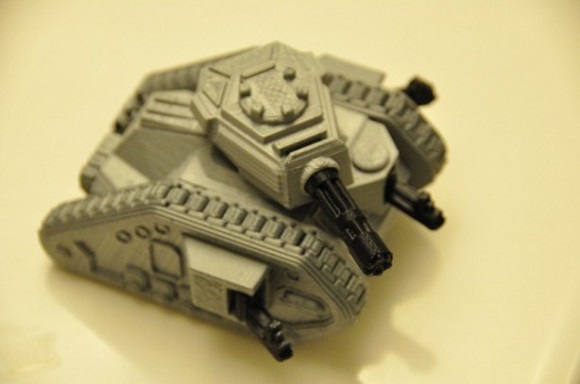


For more visit our store: www.iprinthub.co
Subscribe to:
Posts (Atom)
Rechargeable Battery 1.5V AA 3000mWh Li-Polymer , 4Pcs/Pack
Rechargeable Battery 1.5V AA 3000mWh Li-Polymer , 4Pcs/Pack Buy Now

-
Compatible HP Ink Cartridge HP 913A L0R95AE ,F6179AE , F6177AE , F6178AE PageWide 352dw 377dw 452dw 452dn 452dwt 477dw USE CODE : 280518...
-
HP LaserJet Pro M15w review Meet the world’s smallest budget laser printer " Find it on ...... Ebay , Amazon " The HP Las...
-
 What is 3D Printing? Every 3D print starts as a digital 3D design file – like a blueprint – for a physical object. Trying to print wi...

